The physician
One physician stands behind every word on this site.
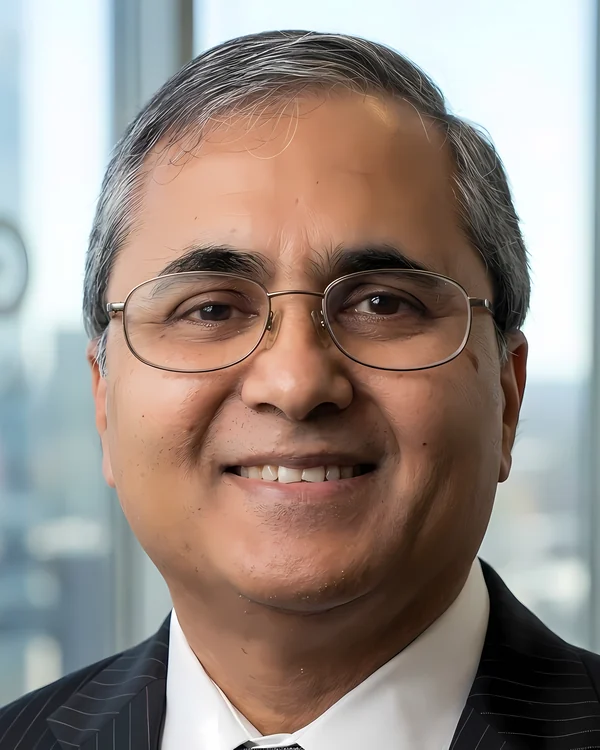
Dr. Tushar Shah, MD, FACC, is the founder and medical director of the Heart Attack and Stroke Prevention Center, and the physician who reads every inquiry this practice receives. His record is set out below, line by line, because a practice that asks for your trust should show its work first.
The record
Every credential, on the record.
Drawn from the credentialing record and the curriculum vitae. Where a role or a certification is historical, the wording says so.
- Board-certified in Cardiovascular Disease
- Board-certified in Internal Medicine
- Board-certified in Adult Echocardiography
- Has held board certification in Advanced Heart Failure & Transplant Cardiology (ABIM), Cardiovascular CT (CBCCT), Nuclear Cardiology (CBNC), and Clinical Hypertension (ASH)
- Fellow of the American College of Cardiology
- Fellow of the American Heart Association
- Fellow of the Heart Failure Society of America
- Fellow of the American Society of Echocardiography
- Fellow of the American College of Physicians
- MD, with Highest Honors
- BA, Biochemistry, cum laude
- Internal Medicine
- Fellowship, Cardiovascular Disease (Chief Cardiology Fellow)
- Fellowship, Advanced Cardiovascular Imaging (Cardiac CT/MRI)
- Fellowship, Advanced Heart Failure & Transplant Cardiology
- Former Clinical Assistant Professor of Medicine
- Former Adjunct Clinical Assistant Professor
- Former Assistant Program Director, Cardiovascular Fellowship
- Founder and Medical Director
- Former Director of Cardiovascular Imaging
- Former Medical Director, Advanced Heart Failure & Transplant Cardiology
- Former Medical Director, Advanced Heart Failure and Mechanical Circulatory Support
- Site Principal Investigator, major cardiovascular outcome trials
- Co-Investigator, Immunosuppression Regimens in Cardiac Transplantation
- Co-Investigator, 3D Image-Guided Surgery Using Real-Time Echoplanar MRI
- Research Assistant, Epigenetic Regulation of the Human Growth Hormone Gene Cluster
- Research Assistant, Myocardial Energetics During Cardiac Ischemia in a Canine Model
- Cardiac Care Provider of the Year
- Founding member
- Served on the Board of Directors
- Former Instructor, Department of Decision Science
- Distinguished Medical Scholars Program
The voice
The work, in his own words.
“I walked away from the cath lab because I couldn’t keep meeting people after the worst day of their lives, when the work that mattered most was the part nobody had done years earlier.”
“We must practice medicine of the heart with a heart.”
Why this record matters
Trust in medicine has fallen.
The remedy is showing the work.
Between April 2020 and January 2024, public trust in physicians and hospitals fell from 71.5% to 40.1%. Trust in one’s own physician held higher (93% in June 2023, then 85%) but moved in the same direction.
That decline will not be answered by reassurance, and it will not be answered by marketing. It is answered the slow way: credentials on the table, sources in the margin, caveats in plain type. A record a skeptical reader can check, line by line.
The first step
A conversation begins the work.
Tell us who you are and what you are looking for. A physician, not a scheduler, not a bot, reads every inquiry.
References · this page
Every figure, sourced.
- Perlis RH, et al. JAMA Network Open: trust in physicians and hospitals, 71.5% (April 2020) to 40.1% (January 2024). KFF survey: share who trust their own physician, 93% (June 2023) to 85%.
- Credentials on this page are rendered from the physician’s curriculum vitae, credentialing record, and practice biography (About Tushar N Shah MD). Roles he no longer holds are marked “Former”; active certifications are noted as such.
- Quotations are rendered verbatim from the practice’s records: the American Heart Association Heart Ball speech and the physician’s one-page note on why he practices prevention. The marked omission […] appears in the source text as delivered.